More Than Just a Precious Metal: Gold as a Material
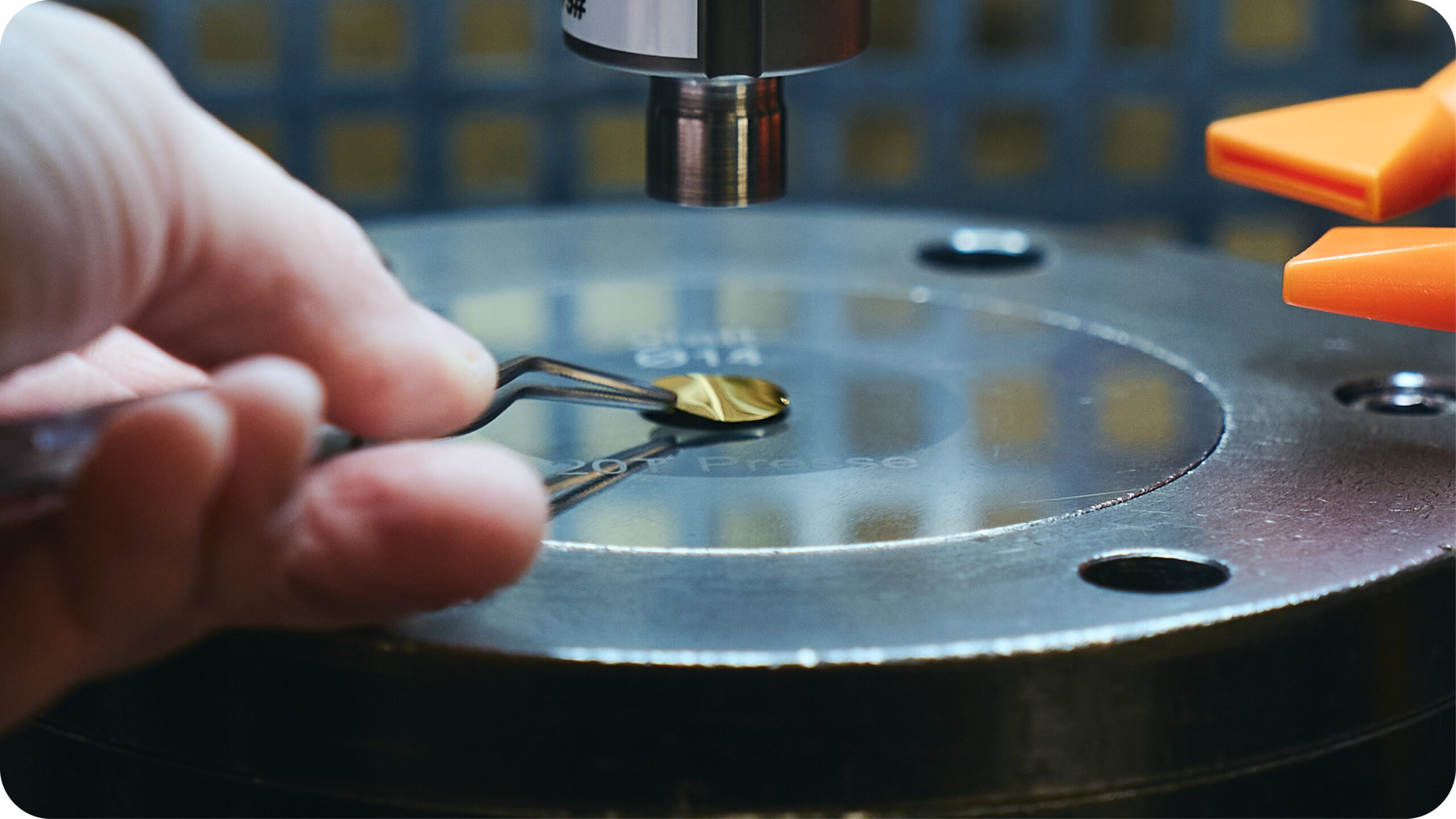
Gold has fascinated people for millennia. Its warm color, luster, and rarity symbolize value, durability, and exclusivity. At the same time, this precious metal possesses properties that make it a versatile material for coins, medals, and jewelry. Unlike most metals, gold naturally has a warm yellow hue. Fine gold is chemically extremely stable. It hardly reacts with air or moisture and therefore retains its characteristic luster for a long time. At the same time, gold is excellent for shaping, rolling, and stamping.
Anyone who works with gold must understand more than just its material value. The gold content, alloy, and manufacturing process determine how the metal can be worked, what color it will take on, and how durable the finished product will be.
Fine Gold, Purity, and Karat
The proportion of pure gold in a material is referred to as its fineness. For example, 999 gold consists of 99.9 percent gold. Very high-purity gold is often referred to as fine gold. Another commonly used unit of measurement is the karat. Common finenesses include:
- 999 gold: 99.9 percent gold or 24 karat
- 916 gold: 91.6 percent gold or 22 karats
- 750 gold: 75 percent gold or 18 karat
- 585 gold: 58.5 percent gold or 14 karats
- 333 gold: 33.3 percent gold or 8 karats
Why Gold Is Alloyed
In an alloy, gold is combined with one or more other metals.
- In addition to gold, yellow gold often contains silver and copper.
- A higher copper content produces red or rose gold.
- In white gold, light-colored alloy metals serve to tone down the natural yellow hue.
The exact composition is not merely a design decision. It also affects how the material can be embossed, shaped, polished, and used in everyday life. For this reason, the alloy must always be tailored to the product and the chosen manufacturing process.
Gold in Coins, Medals, and Jewelry
Gold coins combine intrinsic value, precision, and design. Depending on their intended use, different factors take center stage. For investment coins, gold content, weight, and marketability are particularly important. For collector’s coins, the material value can be enhanced by collectible value based on rarity, minting quality, condition, and design.
Medals, on the other hand, have no face value; rather, they commemorate events, honor achievements, or convey the identity of a brand or institution. Gold is particularly well-suited for minting due to its high malleability. Under high pressure, lines, lettering, reliefs, and fine textures are transferred to the blank using a die. When working with high-purity gold, great care is required, as the soft material is sensitive to scratches and physical contact. Modern processing technologies expand the range of design possibilities. Different textures, finishes, and levels of gloss can add depth to motifs and selectively highlight specific areas.
Gold is also a preferred material for jewelry. It can be shaped into delicate designs, polished to a lasting shine, and combined with gemstones or other materials. The appropriate alloy depends on the design and intended use. A ring, for example, is subjected to greater stress in everyday life than a pendant. In addition to gold content and color, hardness, dimensional stability, and surface durability therefore play an important role. Furthermore, gold jewelry has more than just material value. Its price also reflects the design, craftsmanship, brand, and emotional significance.
Knowledge of Materials as the Foundation of Good Design
Whether it’s a coin, a medal, or a piece of jewelry: Choosing the right material is the first step toward a high-quality result. Gold content, alloy, manufacturing process, and the desired finish must all be considered together from the very beginning. JOLY combines experience in working with precious metals with precision manufacturing, artisanal craftsmanship, and modern technologies. This expertise forms the foundation for bringing sophisticated designs to life and opening up new possibilities for jewelry and embossed products. Gold may be valuable, but it is only through precise craftsmanship that it becomes a piece with a truly special impact.